Current Issue
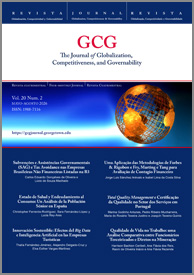
In the first article, Carlos Eduardo Gonçalves de Oliveira and Lúcio de Souza Machado (Federal University of Goiás, Brazil) analyze the relationship between government subsidies and tax planning practices in publicly listed Brazilian companies. Based on a quantitative analysis using effective tax burden indicators, the authors compare subsidized and non-subsidized firms, finding evidence that the former tend to adopt more intensive tax avoidance strategies. Their results provide relevant insights into the indirect effects of public policies on corporate tax behavior.
From the perspective of consumer finance, Christopher Ferreirós-Rodríguez, Sara Fernández-López and Lucía Rey-Ares (University of Santiago de Compostela, Spain) examine how health status influences the indebtedness of the senior population. Using econometric models applied to SHARE survey data, the authors show that certain health conditions increase the likelihood of resorting to external financing, either through formal loans or credit instruments. The study highlights the importance of incorporating the health dimension into the analysis of household financial vulnerability.
The interaction between technology and sustainability is addressed by Thalía Fernández-Jiménez, Alejandro Delgado-Cruz and Elva Esther Vargas-Martínez (Autonomous University of the State of Mexico, Mexico), who analyze the role of big data and artificial intelligence in sustainable innovation within the tourism sector. Based on a quantitative approach using structural equation modeling, the authors demonstrate that the impact of big data is significantly strengthened by the adoption of artificial intelligence, with both technologies emerging as key elements in the development of dynamic capabilities oriented toward sustainability.
In the context of global financial instability, Jorge Luis Sánchez Arévalo and Isabel Lima da Costa Silva (Federal University of Mato Grosso do Sul, Brazil) study the mechanisms of financial contagion between Brazil and its main trading partners during the COVID-19 crisis. By applying complementary methodologies that capture both covolatility and co-skewness, the authors conclude that traditional correlation-based analyses are insufficient to fully understand shock transmission in crisis scenarios, highlighting the value of more comprehensive approaches.
The analysis of quality management practices in the service sector is developed by Marina Godinho Antunes, Pedro Ribeiro Mucharreira, Maria do Rosário Teixeira Justino and Joaquín Teixeira-Quirós (Instituto Politécnico de Lisboa, Instituto Superior de Lisboa e Vale do Tejo, Universidade Autónoma de Lisboa, Portugal). Through a structural equation modeling approach, the authors examine the impact of total quality management and ISO 9000 certification on organizational performance. Their findings show that, while quality practices improve operational and market performance, no significant effect is observed on financial performance, inviting reflection on the real scope of certification as a tool for organizational improvement.
Finally, Harrison Bachion Ceribeli, Ana Flávia dos Reis, Raoni de Oliveira Inácio and Ana Flávia Rezende (Federal University of Ouro Preto, Brazil) address quality of work life in the mining sector, comparing direct employees and outsourced workers. Based on a survey of 252 workers and the use of comparative statistical techniques, the authors identify systematic differences across multiple dimensions of the work environment. The results show that outsourced workers perceive less favorable conditions, lower recognition, and fewer development opportunities, highlighting the existence of structural inequalities associated with this type of employment relationship.
We would like to express our sincere gratitude to all those who contribute to the development and consolidation of the journal: members of the Editorial Board and Advisory Board, associate editors, reviewers, and authors, whose effort and commitment ensure the scientific quality of GCG. We also extend our appreciation to our readers, whose interest and engagement give meaning to this editorial project.
Editor in Chief